The Great Wildebeests Migration 2026
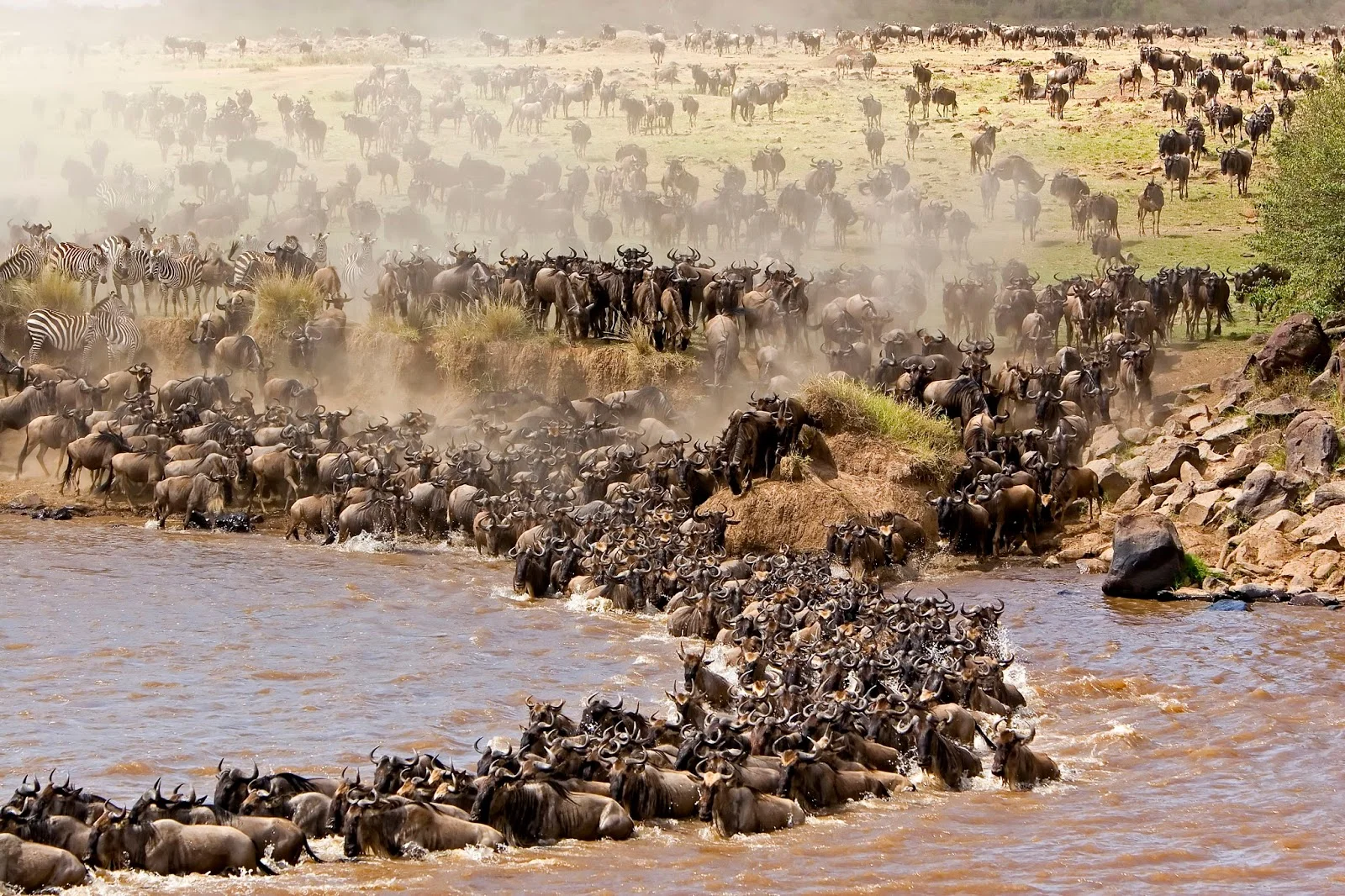
The Great Wildebeests Migration 2026 is one of the most spectacular wildlife events on Earth, taking place across the endless plains of the Serengeti National Park and Maasai Mara National Reserve. In fact, more than 1.5 million wildebeests begin a remarkable journey in search of fresh grazing land and water.
Alongside them travel hundreds of thousands of zebras, gazelles, and other grazing animals, creating one of the largest wildlife movements on Earth. As a result, East Africa becomes the stage for one of nature’s greatest survival stories.
Understanding the Great Wildebeest Migration 2026
Often called the “Greatest Wildlife Show on Earth,” the Great Migration is a year-round natural cycle across the Serengeti-Mara ecosystem.
In addition, the movement is driven by rainfall patterns and the search for greener pastures. Millions of animals move between Tanzania and Kenya during the Great Wildebeests Migration 2026.
However, the journey is filled with danger.
Predators such as lions, cheetahs, leopards, hyenas, and crocodiles follow the herds closely, hunting weak or exhausted animals. Rivers become deadly crossing points, while drought and exhaustion challenge the survival of many animals.
Despite these dangers, the migration continues every year and remains one of nature’s greatest survival stories.
The Great Migration Calendar: Month-by-Month Guide for 2026
Understanding the migration calendar helps travelers choose the best safari experience depending on what they want to see.
January to March – Calving Season in Southern Serengeti
The migration begins in the southern Serengeti plains and the Ndutu Region during calving season.
During this period:
More than 500,000 calves may be born within a few weeks
Predator activity increases dramatically
The plains become filled with newborn animals
Wildlife photography opportunities are exceptional
Newborn wildebeest calves can stand and run within minutes after birth. This quick development is essential for survival in predator-filled landscapes.
Lions, hyenas, and cheetahs closely follow the herds during this season, making it one of the best times for dramatic wildlife viewing and photography.
April to May – Green Season and Herd Movement
As the long rains arrive, the herds begin moving northwest through the Serengeti.
This season offers:
Lush green landscapes
Long migration columns
Fewer tourist crowds
Excellent birdwatching opportunities
Although river crossings have not yet started, this period provides peaceful safaris, dramatic skies, and beautiful photography conditions.
Travelers looking for quieter safari experiences often enjoy this season because the parks feel fresh, vibrant, and less crowded.
June to July 2026 – Approaching Peak Migration Season 2026
By June, the migration enters one of its most exciting stages.
Huge herds gather in the western and northern Serengeti as instinct drives them toward the dangerous river crossing zones.
Travelers visiting during June and early July can expect:
Massive concentrations of wildebeests
Dramatic herd movements
Predator encounters
Excellent dry-season game viewing
Incredible safari photography opportunities
Early river crossing activity
The plains become alive with movement and sound as thousands of animals travel together across dusty landscapes.
July to September – The Legendary Mara River Crossings
This is the most famous stage of the Great Migration and the peak safari season in East Africa.
As thousands of wildebeests arrive at the Mara River, the real drama begins.
The crossings are unpredictable, emotional, and breathtaking. Sometimes the animals gather along the riverbanks for hours or even days while crocodiles wait silently in the water.
Then suddenly, one wildebeest jumps.
Within seconds, thousands follow.
The river erupts into chaos.
Some crossings include:
Some crossings happen quickly
Others become long and dramatic struggles
Some herds turn back unexpectedly
Some crossings involve thousands of animals at once
Because no safari guide can guarantee the exact timing of a crossing, witnessing one feels even more special and unforgettable.
For many travelers, seeing a Mara River crossing becomes the highlight of a lifetime safari experience.
The Predators of the Great Migration
Where millions of grazing animals move, predators naturally follow.
The Great Migration supports one of Africa’s richest predator ecosystems.
Lions
Lions often position themselves near migration routes where prey is abundant. Large prides are frequently seen hunting wildebeests during peak migration months.
Cheetahs
Cheetahs thrive in the open plains, where they use their incredible speed to hunt gazelles and young wildebeests.
Hyenas
Hyenas are intelligent hunters and scavengers. Their haunting calls often echo across the plains during migration season.
Nile Crocodiles
The crocodiles of the Mara River are among the migration’s deadliest predators. Some have waited in these waters for decades, timing their attacks during river crossings.
Why the Great Migration 2026 Matters to the Ecosystem
The Great Migration is not only important for tourism — it is essential for maintaining the balance of East Africa’s ecosystem.
As millions of animals move across the plains, they help to:
Fertilize the land naturally
Spread nutrients across ecosystems
Support predator populations
Maintain healthy grasslands
Preserve balance within the food chain
Without the migration, the Serengeti-Mara ecosystem would change dramatically.
This is why conservation efforts in Tanzania and Kenya remain critically important. Protecting wildlife corridors, national parks, and local communities helps ensure the migration continues for future generations.
Best Places to Experience the Great Migration in 2026
Northern Serengeti – Tanzania
Northern Serengeti is famous for the Mara River crossings and offers some of the most dramatic migration experiences.
This region provides:
Excellent crossing opportunities
Luxury safari camps
Beautiful landscapes
Fewer crowds in certain areas
Maasai Mara – Kenya
After crossing into Kenya, the herds spread across Maasai Mara National Reserve.
The Maasai Mara is known for:
Exceptional predator sightings
Wildlife-filled open plains
Luxury safari lodges
Rich Maasai cultural experiences
Central Serengeti
Central Serengeti offers excellent wildlife viewing throughout the year and is ideal for travelers who want both resident wildlife and migration activity.
Grumeti Region
Grumeti Game Reserve becomes active earlier in the migration season and is famous for dramatic river crossings involving giant crocodiles.
The area also offers more private and exclusive safari experiences.
Photography During Wildebeest Migration Season 2026
For photographers, the Great Migration is a dream destination.
Every day offers endless storytelling opportunities, including:
Massive herd formations
Golden African sunsets
River crossing action
Predator hunts
Dust-filled landscapes
Wildlife silhouettes beneath acacia trees
The best photography moments usually happen:
Early in the morning
Late in the afternoon
During river crossings
During predator encounters
Patience and timing are essential for capturing unforgettable safari images.
Experience the Great Migration 2026 with Bonobos African Safari Holidays
Travelers preparing for the Great Wildebeests Migration 2026 should book safaris early to secure the best lodges and viewing locations. Therefore, early planning significantly increases the chances of witnessing key wildlife moments.
Wildlife photographers consider the Great Wildebeests Migration 2026 a once-in-a-lifetime opportunity. Meanwhile, competition for prime viewing spots continues to increase each year.
Whether traveling as a couple, solo adventurer, family, or photography group, Bonobos African Safari Holidays provides authentic East African safari experiences filled with comfort, adventure, and unforgettable memories.
Final Thoughts
As the 2026 peak migration season approaches, East Africa is once again preparing for one of nature’s greatest spectacles—the Great Wildebeest Migration 2026. This extraordinary event will see millions of wildebeests, along with zebras and gazelles, crossing the vast plains of the Serengeti and Maasai Mara in a timeless cycle of survival and movement.
Make sure you don’t miss the Great Wildebeest Migration 2026, a once-in-a-lifetime safari experience that showcases the raw beauty, drama, and power of the natural world in its purest form.
